
 You might have heard of the new bill called ‘’Renters Rights’’ which has become act and came in to force from May 1st 2026. Many new nurses have come to United Kingdom and has rented properties for living with their family. This act mainly applies to privately rented properties and properties like renting from a housing association ( or local council), living in student halls of residence or being a lodger are excluded from this law. Its important to know for nurses who rent house from private landlords about what this bill is and how they are affected.
Renters Rights Act, United Kingdom May 2026
Lets go through the major points,
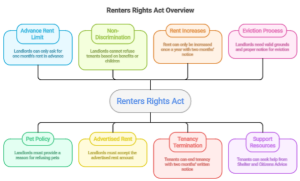
- From May 1st 2026, Landlords can’t ask advance of no more than one month rent after signing tenancy agreement. Your Landlord can’t ask this before signing the tenancy agreement.
- If you ask your landlord to keep a pet on the rented property and your landlord declines your request, he must give a reason for refusal.
- A landlord can’t refuse to give you a property for rent stating that you are on benefits or for example you have children.
- Landlord must accept the rent which is advertised. He/she can’t accept or encourage offers above the rent advertised.
- Your landlord can only increase the rent once a year and not in the first 12 months of a new tenancy. They must use Form 4A and give you at least 2 months’ notice. You can challenge a proposed rent increase that is above the market rent.
- After May 1st 2026, you can end your tenancy by giving 2 month’s notice in writing, text, by letter or email (on the day in which rent is due or day before the rent is due)
- If your landlord agrees, you can end your tenancy earlier. You also need to pay your rent while you are in your notice period.
- If your landlord wants to evict you from the property, they need to give you proper reasons for eviction which is called ‘’Grounds for possession’’
- Usual period of notice for possession by landlord is 4 months but can be shorter for some grounds.
- Grounds for possession can be, your landlord needs to sell or move into the property, if you are a student and is not moving out at the end of academic year, if you have not paid rent on time, if you or people living with you commit antisocial behaviour in or near the property.
Possession order – If your landlord has given you a correct notice of eviction and you do not leave by the end of the notice period, your landlord can apply to court to get their property back.
Where you can get support if your landlord is not following rules?
You can get help from ‘’Shelter’’ and ‘’Citizens Advice’’. Your local council has new powers to investigate and take action if your landlord breaks the law.
Source of information – Renters’ Rights Act overview for tenants – GOV.UK
Hope this article sheds light towards the newly introduced renters rights act in United Kingdom. If you liked this article and thinks that this need to be shared in your friends circle, please do so by sharing our website www.nursecouch.com and joining our free newsletter. Thanks for reading
